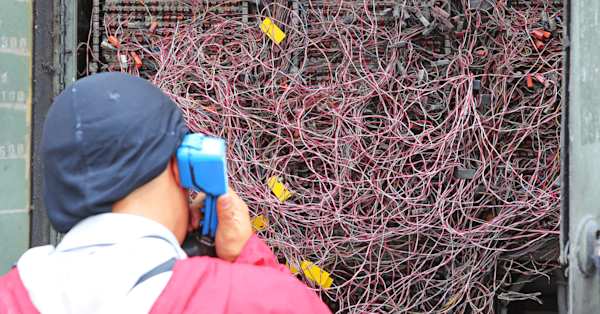




For managers and individual contributors, the friction shows up in the same places: meetings that produce unclear outcomes, writing that takes too long to start, and decisions that require pulling together information under time pressure. The courses that are supposed to help with this...don’t. They teach information that is easy to absorb during the session and just as easy to forget by the next morning.
Why AI “Doesn’t Work” for Most People
AI fails for most professionals, not because the technology is broken, but because nobody showed them a different way to approach it.
Someone pastes a meeting transcript into an AI tool and asks for a summary. The output sounds confident, but it includes decisions that were never actually made. The immediate reaction? This thing cannot be trusted.
Or someone asks AI to draft a response to a client. The words are technically fine, but the tone is off. And then for the trivial stuff (someone asks if you are going to be at the meeting on Friday), the answer is just “Yep, I’ll be there.” You do not need AI for that. The challenge is knowing which messages are worth involving AI in and which ones are not.
These experiences pile up, and pretty soon you start wondering: everybody seems excited about AI, so why am I just continually frustrated with it? I hear that question a lot. And the answer is almost always the same: nobody taught you a different way to interact with the tool.
The Trust Problem No One Addresses Well
When people first sit down to work with AI in any kind of structured way, the number one concern is trust. Not whether AI is useful in theory, but a very practical worry: “I don’t know if it’s just going to lie to me.” I hear some version of that in almost every conversation.
And the concern is grounded. Language models can fabricate. But here is what most training programs miss: they either ignore the trust problem entirely, or they spend an hour explaining the technical reasons behind hallucinations without ever showing you what to do about it.
The practical fix is not asking you to trust AI. It is teaching you how to challenge it. Ask where a claim came from. Ask for direct quotes from the source material. Ask what assumptions were made. Once you learn how to provide the right inputs and ask for the receipts, trust stops being a yes-or-no question and becomes conditional: trust it when you can verify it.
Why Treating AI Like a Search Engine Fails
Here is the other big failure point. Most people approach AI the way they approach Google: type something, get a result, move on. But AI works through interaction, and the first response is almost never the one you should keep. A lot of professionals figure this out the first time they push back on an AI response and watch it get better. The realization is uncomfortable because the problem was not the tool. It was how they were using it.
A single vague prompt almost guarantees disappointment. The key is to realize that the more context that you give AI, the better response it will give. Sometimes that context is going to come through a discussion with AI as your intent and goals emerge through giving feedback on what you like and don't like. That one reframe changes everything that comes after it.
Why Learning AI Now Matters More Than Later
A lot of professionals are waiting, figuring they will pick up AI skills once the tools stabilize. I understand that instinct. But I think it is a mistake.
Imagine the 100-meter dash at the Summer Olympics. The starting pistol fires and every runner launches off the blocks. But one runner stands up, watches everyone else, studies their techniques, and decides to join once they understand the field. By the time they start running, the race is over.
AI adoption is following that same pattern. Gallup’s Q3 2025 workforce survey found that 45% of U.S. employees now use AI at work, nearly doubling from 21% in 2023, and EY’s Work Reimagined Survey found that companies are missing out on up to 40% of potential AI productivity gains because of gaps in talent strategy. People who start earlier build intuition. They recognize when an output is fragile. They know how to recover without starting over. Waiting does not give you a better starting position. It just puts you further behind.
Think about what it would feel like to hire someone today who says, “So am I going to have to use this Internet thing?” Nobody asks that question anymore. But AI is heading in the same direction. Right now, learning AI is still seen as getting ahead. Soon enough, not knowing it will just be falling behind.
Why This Is a Training Problem, Not a Tool Problem
Most AI frustration has nothing to do with missing features. It comes from missing habits.
The numbers back this up. DataCamp’s 2026 State of Data and AI Literacy Report found that 82% of enterprise leaders say they provide AI training, yet 59% still report an AI skills gap. The most common format is video-based courses, and 23% of leaders say video training does not translate to real-world application. Organizations are investing in training that is not changing how people work.
When I was designing our AI training, I made a very deliberate decision. I am not just going to tell you about a thing. I am going to have you do the thing. Because the difference between watching someone use AI and actually using it yourself is the difference between a forgettable session and a skill that sticks.
Knowing what a hallucination is does not help you when a meeting summary misrepresents a decision. What helps is learning how to provide context, how to demand evidence, and how to refine output without starting over. Prompt libraries promise shortcuts, but real work rarely fits templates. The durable skill is structured thinking: learning how to frame your requests with enough context and constraints that the system responds appropriately, regardless of which tool you are using.
Three Skills That Change Day-to-Day Work
When I was building the curriculum, I asked AI itself to research what professionals are most frequently asking for help with. The answer kept pointing to three areas.
Uncovering Insights from Messy Inputs
Meetings generate noise. Transcripts run long. Reports have more detail than anyone can process quickly. AI can help condense and organize all of that, but only if you stay accountable for verifying what comes back.
Asking for a summary is the easy part. The harder and more valuable skill is asking AI to show its sources. If it claims a decision was made, ask it to point to the exact passage. If a takeaway does not sound right, push back: “I don’t remember that from the meeting. Show me where that is.” That habit is the difference between speed and error.
Generating Ideas Without the Blank Page
I do not know about you, but for me the most paralyzing moment in any task is the beginning. Staring at a blank page, trying to figure out where to start. AI solves this not by writing the final version but by giving you something to react to. Once you are reacting instead of creating from nothing, you are moving.
Here is a technique that I share in every session: ask for multiple options rather than a single answer. Ask for five ideas. Review them. The first two might be terrible. The third might have something worth exploring. Tell AI to go deeper on that one and throw the rest away. That sets up an iteration cycle, and iteration is where the real value lives.
Drafting Communication with Accountability
AI can get you 90% of the way on a piece of writing that would have taken significant time to start from scratch. I have never had a thing where AI gave me something I did not have to tweak at all. It never gets it 100% right. But that remaining 10%, the nuance, the tone, the judgment about what to include, that is your job. AI handles the heavy lifting, and you focus on the part that requires your expertise.
I draw a clear line here: AI can draft, but it does not send. The human owns tone, intent, and consequences. The discomfort people feel about AI handling communications entirely? That is well-placed. Having AI prepare a draft for your review is a fundamentally different thing from having it respond on your behalf.
Why Hands-On Practice Changes Outcomes
There is a difference between seeing AI used and using it yourself. Demos look clean, but real work does not. When you actually practice with AI, you see where your inputs were too vague, where constraints were missing, and where the first confident-sounding response was wrong.
And then something shifts. You structure a real interaction with clear context and constraints, and the output actually works. The realization is blunt: it did not fail randomly. It failed predictably. That is the moment you stop blaming the tool and start changing how you interact with it.
When you provide context, set boundaries, and iterate, AI produces drafts that hold together. Trust becomes conditional instead of binary, and the rework drops. Someone who spent 45 minutes writing a client update discovers that with clear context and two rounds of iteration, AI produces a usable draft in minutes. The remaining time goes to judgment: refining tone, checking accuracy, deciding what to leave out.
The professionals who make AI stick are the ones who apply it to their own problems early. Someone tackles a proposal outline they have been putting off. Someone else feeds in a meeting transcript and pulls action items. When the stakes feel real, the learning sticks faster.
Does Teaching AI Fundamentals Actually Change Anything?
This is a fair question. Professionals are busy, AI changes fast, and it is reasonable to ask why anyone should invest in learning the basics when the tool will be different in six months. And the argument holds up if fundamentals training means memorizing features, watching demos, and leaving with a list of prompts. That kind of training does not change behavior.
But fundamentals, defined as interaction discipline (how to structure context, how to iterate, how to verify), are not tied to any particular model or release cycle. They work the same way in ChatGPT as they do in Copilot, and they will work in whatever ships next year. The interface changes. The thinking does not.
The gap most professionals are stuck in is not between basic and advanced knowledge. It is between occasional use and reliable use. You have tried AI, gotten mixed results, and not changed your interaction patterns. That gap closes by practicing a different way of working, not by learning more theory.
Even experienced users pick up useful techniques in fundamentals-focused settings, because knowing a lot about AI and using it effectively are two different things. The people already building agents and automating workflows are a different audience with different needs. For the much larger population using AI occasionally and inconsistently, the bottleneck is almost always interaction habits, not technical depth.
Applying AI to Real Work
Training fails when it stays abstract. Real work has constraints: policies, customers, tone, and risk. Pulling people away from work for extended periods is hard, and shorter, focused sessions tied to real tasks tend to produce more lasting change than marathon lectures. The format should fit how you actually learn: in concentrated bursts, connected to problems you already face.
A practical starting point? Look at what frustrates you. Tasks that are slow or mentally draining often contain parts AI can compress. Someone who spends two hours each week writing status updates can likely compress that to 20 minutes with the right interaction structure, freeing up time for work that actually requires their judgment.
And the applications go beyond text. AI can generate images, create visual aids for presentations, and produce supporting content. Once you see that you can describe a concept and have AI produce a working version, the range of tasks you consider using AI for expands.
Early use tends to focus on low-risk situations: notes, options, internal drafts. Over time, some uses stick and others disappear. The professionals who make AI part of how they work going forward are the ones who found two or three use cases where it reliably saved them time and built those into their routine.
Key Takeaways
AI does not underdeliver because the technology is broken. It underdelivers because most people were never taught how to interact with it. That is a training problem, and 56% of workers globally have not received any AI training at all.
Three skills that we see making the biggest difference for non-developers adopting AI are uncovering insights from messy inputs, generating ideas by pushing past the blank page, and drafting communication where AI does the heavy lifting and you own the final 10%.
The skills that actually stick (structured thinking, iteration, verification) are not tied to any specific tool or model. They work regardless of what platform you are using. But if your organization is waiting to build those skills, that wait has a price: EY's research found that companies are leaving up to 40% of their potential AI productivity gains on the table because of gaps in how they develop talent.
AI as a Professional Skill
None of this is complicated. But it does require a different approach than most professionals have been taught. And the longer teams wait to build these habits, the more time gets lost to rework, rechecking, and correcting mistakes that did not have to happen.
At Improving, this thinking shows up in the AI Essentials Workshop for Professionals and across our AI course catalog for leaders, executives, and product managers. These sessions focus on applied interaction rather than theory. I have written about the principles behind this approach in The Future of Career Learning.
If any of this resonated, or if you have your own AI training stories (the good, the bad, and the frustrating), I would genuinely enjoy hearing about them. You can find me on LinkedIn.